The best times to send a romantic GIF
2026-01-02 14:55:53
In the digital age of romance, a perfectly timed animated heart or a lovingly crafted "good morning" GIF can speak volumes. But psychologists are discovering that when you hit send matters just as much as what you're sending. Recent research into digital communication reveals that timing isn't just a courtesy—it's a powerful signal that shapes
INDEX
- Why Timing Is a Love Language
- The Golden Windows for Romantic GIFs
- Times to Avoid: The "Digital Minefield"
- The Critical Role of Context
- The 200-Millisecond Rule for Digital Romance
- The Bottom Line: Intention Beats Perfection
Why Timing Is a Love Language

Why Timing Is a Love Language
Our brains are wired to interpret response patterns as "honest signals" of connection. Groundbreaking research published in the Proceedings of the National Academy of Sciences found that face-to-face conversational response times of around 200 milliseconds—faster than conscious thought—reveal genuine social attunement. While digital communication introduces artificial delays, the psychology remains the same: timely, thoughtful gestures strengthen perceived connection.
"When we send affection at moments of genuine availability, we demonstrate that our partner exists in our minds even during our busy lives," explains relationship psychologists. This "intermittent reinforcement"—unpredictable but meaningful contact—activates the brain's reward centers more powerfully than routine messages.
The Golden Windows for Romantic GIFs

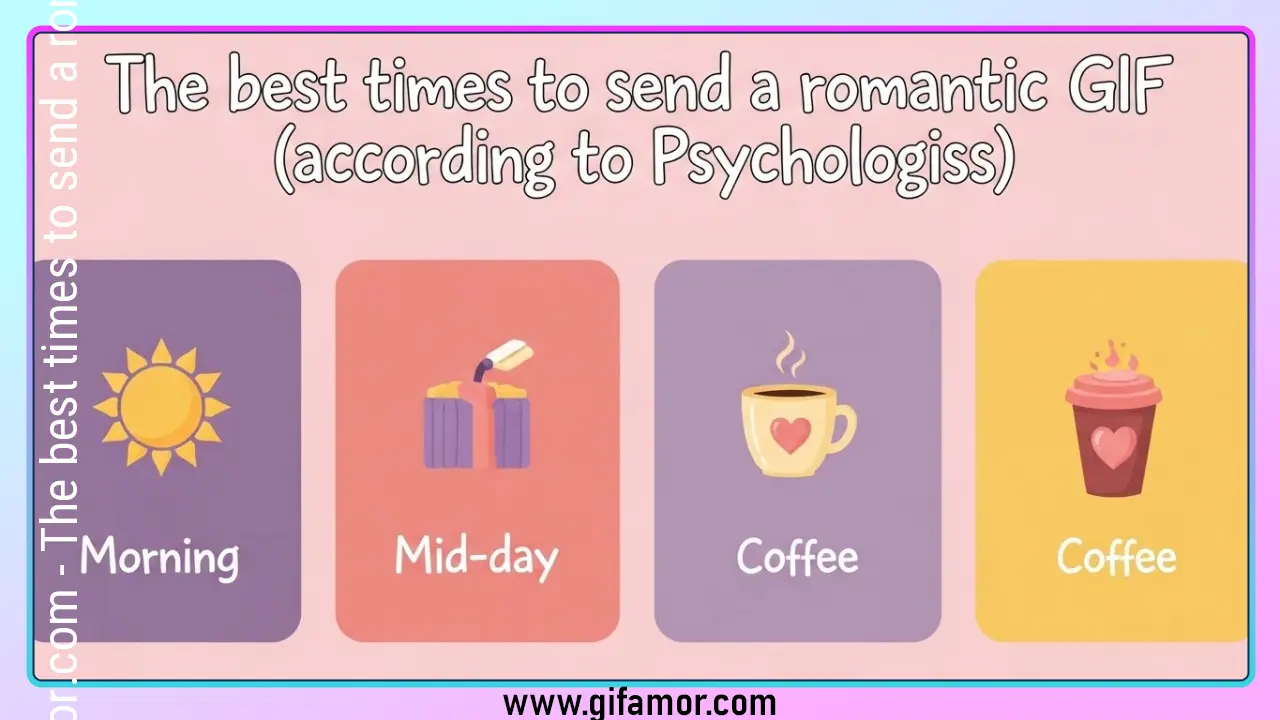
1. The Morning Boost (7:00–9:00 AM)
Sending a romantic GIF during breakfast hours capitalizes on what psychologists call "priming"—setting a positive emotional tone for the entire day. Research from digital communication studies shows that morning messages correlate with higher relationship satisfaction, particularly in long-distance relationships where partners rely heavily on digital connection.
Best for: "Good morning beautiful" animations, coffee cup hearts, sunrise romantics. Pro tip: Wait until after 7 AM to respect sleep schedules.
2. The Midday Connection (12:00–2:00 PM)
Lunch breaks represent a psychologically "safe" window—your partner is likely taking a mental pause from work stress. Studies on texting behavior show that moderate-delay responses (30 minutes to 4 hours) during work hours signal secure attachment and healthy boundaries. A surprise GIF here says "I'm thinking of you" without demanding immediate attention.
Best for: Cute lunch date invitations, "miss you" animations, funny love memes. Avoid: If your partner has previously mentioned high-pressure midday meetings.
3. The Evening Wind-Down (7:00–10:00 PM)
This is the premium time slot for romantic digital affection. Research from the Journal of Social and Personal Relationships indicates that evening digital communication predicts greater relationship satisfaction, especially when partners share about their day. The brain's oxytocin levels naturally rise in the evening, making us more receptive to bonding cues.
Best for: Cuddly animations, "how was your day?" GIFs, romantic movie scenes. Caution: After 10 PM, you're entering risky territory (see below).
4. The Power of Random Timing
Here's where psychology gets interesting: planned randomness strengthens bonds more than predictable patterns. A 2024 study highlighted that "randomly timed text messages" at unconventional moments create delightful surprises that feel more authentic than clockwork check-ins. This demonstrates spontaneity and genuine thought, not just routine.
Try this: Send a GIF at 3:17 PM on a Tuesday "just because." The unpredictability triggers dopamine release.
Times to Avoid: The "Digital Minefield"

Psychologists identify specific moments when even the cutest GIF can backfire:
🚫 The Sleep Disruption Zone (Before 7 AM or After 10:30 PM)
"Refrain from sending messages super early or late at night," advises Verywell Mind. Even with phones on silent, the notification can trigger unconscious stress. Plus, messages sent during these windows may be interpreted as anxious attachment behavior.
🚫 During Work Hours (9 AM–12 PM, 2–5 PM)
Unless you know your partner's schedule intimately, avoid sending demanding romantic content during deep work periods. Research shows that interruption during focused tasks creates resentment, not connection. If you must, make it low-pressure: a simple heart animation rather than a "why aren't you responding?" GIF.
🚫 Mid-Argument or Immediately Post-Conflict
Digital communication during emotional flooding is problematic. Studies confirm that attempting to resolve conflicts via text increases misunderstanding. Sending a romantic GIF to "fix" things can be perceived as dismissive. Wait until you've both cooled down and can discuss the issue properly.
🚫 During High-Stress Events
If your partner has a big presentation, family emergency, or exam, even positive distractions can feel tone-deaf. A 2022 study found that digital support is most effective when recipients are alone and specifically seeking connection. Read the room—or better yet, ask directly about their preferences.
The Critical Role of Context

Relationship Stage Matters
-
First 3 months: Keep it light and avoid late-night messages. Research on post-first-date texting shows a curvilinear effect—too soon seems desperate, too late seems disinterested. Midday "thinking of you" GIFs work best.
-
6+ months: Evening and random timings create deeper intimacy.
-
Long-term: Morning routines and spontaneous moments maintain connection.
Attachment Styles Predict Timing Preferences
Your partner's attachment style (formed in childhood) shapes how they interpret GIF timing:
-
Secure (60% of people): Flexible, appreciates most timing if respectful
-
Anxious (20%): Craves rapid responses; random delays trigger anxiety
-
Avoidant (15%): Prefers space; excessive timing feels smothering
The solution? Have an open conversation: "When do you love receiving these most?"
Long-Distance vs. Geographically Close
For long-distance couples, digital timing becomes primary relationship maintenance. Morning and evening messages are crucial lifelines. For couples who see each other daily, random timing adds spice without the pressure of being the main connection source.
The 200-Millisecond Rule for Digital Romance

While you can't respond at 200ms digitally, you can apply the principle: respond with intentionality that signals attunement. This means:
-
Notice patterns: When does your partner typically message you? That's their "available window."
-
Match energy: If they respond in 2 hours, don't always reply in 30 seconds. Reciprocity builds trust.
-
Quality over speed: A thoughtfully chosen GIF sent after 3 hours beats a rushed, generic one sent instantly.
Practical Implementation: Your Timing Strategy
For New Relationships:
-
Start with midday (12–2 PM) messages
-
Observe response patterns for 2 weeks
-
Gradually introduce morning messages if received positively
-
Avoid late-night messages until you've discussed sleep schedules
For Established Couples:
-
Establish a morning GIF routine (primes positivity)
-
Surprise with 1–2 random daytime messages weekly
-
Use evening messages for deeper emotional check-ins
-
Never use GIFs as conflict resolution tools
For Long-Distance Love:
-
Morning (your time) = Evening (their time) messages create connection across time zones
-
Send "goodnight" animations that arrive during their evening
-
Use random timing to simulate "thinking of you" spontaneity
The Bottom Line: Intention Beats Perfection

Psychologists agree: there's no universal "perfect time"—but there are psychologically informed principles that maximize impact. The most important factor isn't the clock; it's whether your timing demonstrates respect, attunement, and genuine affection.
As attachment research shows, consistency in communication patterns builds security. So pick 2–3 time windows that work for your relationship and make them yours. Then add that unpredictable spark that keeps romance alive.
Your action plan: This week, send one romantic GIF during each golden window (morning, midday, evening). Notice which gets the warmest response. That's your partner's love language—telling time.